Copyright 2009
The chattering box pours out the bad news
recession
depression?
stock market compression
relentlessly, day by day, like some insane preacher of doom
“the end is near”
as it has been since the dawn
We have ever lived on the brink of disaster,
this human family, this myriad, majestic, maddening tribe
living on an orb of rock and water
with a core of liquid fire
swirling through a vast, eternal night
a vacuum
airless, hopeless
Wobbling profoundly round a seething, roaring cauldron
of exquisite, unimaginable heat and light
Accompanied in space by ten thousand random stones the size of mountains
each able to wreak terminal devastation
should it come rumbling down to earth
ripping apart the air
heaving up the waters
with superheated energy which
traveling round the globe
wipes away the life
like so many bacteria
from a table top
until breath ceases
photosynthesis is extinguished
and the teaming planet
becomes as lifeless as dust.
And still but a tiny speck
in an insignificant solar system
looping around an ordinary star
in a vast but unremarkable galaxy
which races away into infinity
leaving its own kind
a wandering family of planets and stars
and black holes
fleeing into the beyond
While a few thousand light years away
a star threatens to go supernova
and spew gamma waves which travel
at the speed of light to earth
and kill every living thing.
And we fret about the decline in our savings
There come childhood remembrances of looking up at night
marveling at the light from the Milky Way
a view to the edge of the galaxy
as it spilled down the
the cobalt dome, pale and remote
now gone from our view
thank you smokestacks
gracias tree burners
danke automobiles
Man can die a thousand ways
life can be whisked away
like a wind blown leaf
its sweetness swallowed up in an instant
and everything loved or owned or hated or feared
is gone, evaporated like steam from a kettle
and those left behind to wonder
about the other side
whence did that essence depart?
the question indeed
And answers come slowly
come quickly
come seldom
come late
but they come
And the Word breathed Truth
with beauty and brilliance
and in the end
His children abide in
Halls of Light
where reign peace and joy
and resides that Balm in Gilead.
Wednesday, February 18, 2009


Saturday, February 14, 2009
Visions, Volume 1
I am pleased to tell you that I just had a short story, "Black Mountain," published in an anthology of horror and speculative fiction tales. The anthology, Visions, Volume 1, is published by Visionary Comics and Strider Nolan Media.
My friend, Dianne Salerni, also has a story in the book, The Necromancer, which is dynamite.
The book is available through Amazon and other booksellers. The url for the Amazon page is http://www.amazon.com/Visions-1-Bernd-Struben/dp/1932045198/ref=pd_rhf_p_t_4.
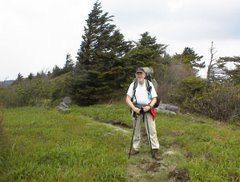
I wrote Black Mountain partially because of my love of hiking and backpacking. If you have ever been alone on a soaring mountain in the middle of a wilderness at night, you can appreciate that noises in the woods might take on a special kind of terror. If you like spooky stories, this book just might be for you. I hope you enjoy it.
My friend, Dianne Salerni, also has a story in the book, The Necromancer, which is dynamite.
The book is available through Amazon and other booksellers. The url for the Amazon page is http://www.amazon.com/Visions-1-Bernd-Struben/dp/1932045198/ref=pd_rhf_p_t_4.
I wrote Black Mountain partially because of my love of hiking and backpacking. If you have ever been alone on a soaring mountain in the middle of a wilderness at night, you can appreciate that noises in the woods might take on a special kind of terror. If you like spooky stories, this book just might be for you. I hope you enjoy it.
Tuesday, February 3, 2009
Chapter Four
Greetings, gentle reader. Herewith is the fourth chapter of the book, Scarecrow in Gray.
The life of a Southern soldier
is such a life of ease;
the cold and the dark
are but a bad dream.
September 10, 1864 dawned a bit cooler than the past few days. Whit and I left Camp Vance early that morning with about seventy-five other men to serve as replacements in various units in Petersburg. We rode on an old box car made for cattle. They herded us aboard and we sat shoulder to shoulder on the rocking train as it rolled toward the battlefields of Virginia. The undulating hills, woods and fields rolled by with what became a dull sameness. Decay and neglect were evident in the countryside as we passed, the steel wheels clacking rhythmically beneath us. Whit stayed close to me the whole time. He had come to look to me to take care of him. I don’t know why since I was just as scared and lonesome as he was. In the afternoon of the 11th, it started to rain. The rain soaked us as it blew in through the slats in the car, and the wind that whipped us felt cold. It was a miserable ride toward a dreaded destination.
After riding all that day and most of the next, we got off somewhere in Virginia and marched the rest of the way to Petersburg. Sections of track in the area were torn up by Federal Cavalry and the trains that were able to get through in Southern Virginia were needed for more important cargo I suppose. We stopped for the night about forty five miles west of Petersburg at about seven o’clock. A light rain fell as we made camp.
I checked my Pa’s pocket watch to be sure it was dry. He had left it to me when he went on to be with the Lord. He must have saved up his money for years to buy that watch. It came all the way from Switzerland and was made of silver with some fancy carving on it. He only got to use it two years before he passed on. I remember that day well. It was a dark stain on the pages of my life. My Pa sat down in his rocking chair one night, after supper, and closed his eyes and in a little while, he was gone. We never knew why. He had been having some pains in his chest and arms and some folks said it was neuralgia, but nobody really knew for sure. His passing hit me hard. I had to take care of that watch. It was what I had to remember him by. I kept it wrapped tight in a little oil cloth to keep it clean and dry.
We cooked up a little fat back and eggs for supper then soaked some hardtack in the grease for a dessert. It wasn’t half bad considering where we were and how we were living at the time. The sergeant placed pickets at a hundred to two hundred yards out because of the possibility there was Yankee cavalry roaming about. The night was warm and the rain had stopped, so we put out the fire early. I strolled out from the camp a ways and lay down in a little clearing and began to search the sky. The clouds had blown off. The stars were bright pinpoints on the coal black canvas of night.
As I lay there, looking up, I began to wonder if I would ever see my family again, or plow old Moses, or even see my farm again. I couldn’t help it; my eyes began to grow moist. I love my wife and my children and I knew how badly they needed me at home. I knew Harriett would try to plow the mule and keep things running, but she’s a woman and was not built for that kind of work. My girls could not be of much help with the heavy work, though I was sure they would try.
I thought about the war, about why I was here and the thoughts ran into a dead end. I lay there under the stars, looking up at God’s heaven. It surely was beautiful here in Virginia, a lot like home. I also thought about how good the weather was, good for working the fields, for cutting firewood for the winter, for just enjoying God’s nature. A farmer always keeps a weather eye out. You have to work the fields when you can, because the times are many when the weather won’t let you, when it’s too wet to plow or too cold and the ground’s hard. The house needs some work too. I needed to split some new shingles for the roof. Then I thought, Lord, that roof’s going to leak this winter just as sure as I’m laying here. What will Harriett do? She’ll probably get a bunch of pots and buckets and catch the water as best she can. She’s like that, doesn’t complain, and just does what needs to be done. Lord, I miss that woman, the light of my life.
About the time I started thinking about Harriett and was kind of losing myself in the thought, along came Whit with a dreadful hacking. He let go a stream of tobacco juice with well practiced ease and said, “Better come on and get in the sack, Francis, long day tomorr’, startin’ before sunup.”
“I’ll be on in a bit,” I said.
Of course that didn’t satisfy Whit. He settled himself down on the ground beside me and reclined with an exaggerated groan, following my gaze upward. Then he asked, “What you lookin’ at, Francis?”
I replied without looking at him, “Just the sky.”
He cocked his head and asked, “Why you lookin’ at the sky? Worried about the weather? You don’t have to plow tomorr’.”
“I’m just lookin’ and thinkin’.”
He wrinkled his brow, “I know what you mean. Say, I been thinkin’ for some time about somethin’.”
“What’s that,” I asked, not really wanting to know the answer because Whit’s mind is a garden of the trivial.
He said “I was wonderin’ why your maw and paw named you Francis. Ain’t that a girl’s name?”
I sighed and smiled to myself at the familiar question. “It is a girl’s name if it’s spelled with a ‘E.’ My name’s spelled with a ‘I.’”
He grunted. “You mean one little letter is the difference between yore name and a girl’s?”
“That’s right.”
Then he asked with some agitation, “Well why didn’t they name you John, or Robert or William or something that couldn’t be confused with a girl?”
Again I smiled to myself and said, “My folks named me for the great general of the Revolution, Francis Marion. He was called the ‘Swamp Fox’ because he outfoxed the Brits and the Tories. He would attack them and then fade into the swamps down in the South Carolina low country; he just disappeared in those dismal haunts like a ghost.
“My Paw was real impressed with the stories about the Swamp Fox, so he named me after him. My grandpa, James Yelton, fought in the Revolution. He was a die hard Patriot. He lived to be ninety-three years old. My Pa was so proud of my Grandpa and his fightin’ the Tories and the British in the Revolution. He wanted me to carry on a famous revolutionary hero’s name. So that’s how I came to have the name ‘Francis.’”
Whit was silent for several minutes. Then he looked at me with this sort of amazed grin and said, “Well, I’ll be the son of Red Coat!” He shook his head a couple of times and said, “I’ll be, I’ll be.”
I think for once I answered one of Whit’s questions without him having to ask fifty more questions about “why.” “I guess we better turn in,” I said, and we walked back to camp where the other men were already sawing logs. I lay there for a long time before I went to sleep, wondering about the future. Will I make it home? Will I be crippled by a Yankee bullet? Will I see my family again? It all rolled over and over in my head until I finally fell asleep.
The life of a Southern soldier
is such a life of ease;
the cold and the dark
are but a bad dream.
September 10, 1864 dawned a bit cooler than the past few days. Whit and I left Camp Vance early that morning with about seventy-five other men to serve as replacements in various units in Petersburg. We rode on an old box car made for cattle. They herded us aboard and we sat shoulder to shoulder on the rocking train as it rolled toward the battlefields of Virginia. The undulating hills, woods and fields rolled by with what became a dull sameness. Decay and neglect were evident in the countryside as we passed, the steel wheels clacking rhythmically beneath us. Whit stayed close to me the whole time. He had come to look to me to take care of him. I don’t know why since I was just as scared and lonesome as he was. In the afternoon of the 11th, it started to rain. The rain soaked us as it blew in through the slats in the car, and the wind that whipped us felt cold. It was a miserable ride toward a dreaded destination.
After riding all that day and most of the next, we got off somewhere in Virginia and marched the rest of the way to Petersburg. Sections of track in the area were torn up by Federal Cavalry and the trains that were able to get through in Southern Virginia were needed for more important cargo I suppose. We stopped for the night about forty five miles west of Petersburg at about seven o’clock. A light rain fell as we made camp.
I checked my Pa’s pocket watch to be sure it was dry. He had left it to me when he went on to be with the Lord. He must have saved up his money for years to buy that watch. It came all the way from Switzerland and was made of silver with some fancy carving on it. He only got to use it two years before he passed on. I remember that day well. It was a dark stain on the pages of my life. My Pa sat down in his rocking chair one night, after supper, and closed his eyes and in a little while, he was gone. We never knew why. He had been having some pains in his chest and arms and some folks said it was neuralgia, but nobody really knew for sure. His passing hit me hard. I had to take care of that watch. It was what I had to remember him by. I kept it wrapped tight in a little oil cloth to keep it clean and dry.
We cooked up a little fat back and eggs for supper then soaked some hardtack in the grease for a dessert. It wasn’t half bad considering where we were and how we were living at the time. The sergeant placed pickets at a hundred to two hundred yards out because of the possibility there was Yankee cavalry roaming about. The night was warm and the rain had stopped, so we put out the fire early. I strolled out from the camp a ways and lay down in a little clearing and began to search the sky. The clouds had blown off. The stars were bright pinpoints on the coal black canvas of night.
As I lay there, looking up, I began to wonder if I would ever see my family again, or plow old Moses, or even see my farm again. I couldn’t help it; my eyes began to grow moist. I love my wife and my children and I knew how badly they needed me at home. I knew Harriett would try to plow the mule and keep things running, but she’s a woman and was not built for that kind of work. My girls could not be of much help with the heavy work, though I was sure they would try.
I thought about the war, about why I was here and the thoughts ran into a dead end. I lay there under the stars, looking up at God’s heaven. It surely was beautiful here in Virginia, a lot like home. I also thought about how good the weather was, good for working the fields, for cutting firewood for the winter, for just enjoying God’s nature. A farmer always keeps a weather eye out. You have to work the fields when you can, because the times are many when the weather won’t let you, when it’s too wet to plow or too cold and the ground’s hard. The house needs some work too. I needed to split some new shingles for the roof. Then I thought, Lord, that roof’s going to leak this winter just as sure as I’m laying here. What will Harriett do? She’ll probably get a bunch of pots and buckets and catch the water as best she can. She’s like that, doesn’t complain, and just does what needs to be done. Lord, I miss that woman, the light of my life.
About the time I started thinking about Harriett and was kind of losing myself in the thought, along came Whit with a dreadful hacking. He let go a stream of tobacco juice with well practiced ease and said, “Better come on and get in the sack, Francis, long day tomorr’, startin’ before sunup.”
“I’ll be on in a bit,” I said.
Of course that didn’t satisfy Whit. He settled himself down on the ground beside me and reclined with an exaggerated groan, following my gaze upward. Then he asked, “What you lookin’ at, Francis?”
I replied without looking at him, “Just the sky.”
He cocked his head and asked, “Why you lookin’ at the sky? Worried about the weather? You don’t have to plow tomorr’.”
“I’m just lookin’ and thinkin’.”
He wrinkled his brow, “I know what you mean. Say, I been thinkin’ for some time about somethin’.”
“What’s that,” I asked, not really wanting to know the answer because Whit’s mind is a garden of the trivial.
He said “I was wonderin’ why your maw and paw named you Francis. Ain’t that a girl’s name?”
I sighed and smiled to myself at the familiar question. “It is a girl’s name if it’s spelled with a ‘E.’ My name’s spelled with a ‘I.’”
He grunted. “You mean one little letter is the difference between yore name and a girl’s?”
“That’s right.”
Then he asked with some agitation, “Well why didn’t they name you John, or Robert or William or something that couldn’t be confused with a girl?”
Again I smiled to myself and said, “My folks named me for the great general of the Revolution, Francis Marion. He was called the ‘Swamp Fox’ because he outfoxed the Brits and the Tories. He would attack them and then fade into the swamps down in the South Carolina low country; he just disappeared in those dismal haunts like a ghost.
“My Paw was real impressed with the stories about the Swamp Fox, so he named me after him. My grandpa, James Yelton, fought in the Revolution. He was a die hard Patriot. He lived to be ninety-three years old. My Pa was so proud of my Grandpa and his fightin’ the Tories and the British in the Revolution. He wanted me to carry on a famous revolutionary hero’s name. So that’s how I came to have the name ‘Francis.’”
Whit was silent for several minutes. Then he looked at me with this sort of amazed grin and said, “Well, I’ll be the son of Red Coat!” He shook his head a couple of times and said, “I’ll be, I’ll be.”
I think for once I answered one of Whit’s questions without him having to ask fifty more questions about “why.” “I guess we better turn in,” I said, and we walked back to camp where the other men were already sawing logs. I lay there for a long time before I went to sleep, wondering about the future. Will I make it home? Will I be crippled by a Yankee bullet? Will I see my family again? It all rolled over and over in my head until I finally fell asleep.
Tuesday, January 13, 2009
Scarecrow in Gray, Chapter Three
Copyright 2005, 2006
On the long winding road
to Gehenna
I paused to look at the stars,
sparkling with the cold eye of death.
We started out early the next morning, after a delicious breakfast of eggs, ham and some of the finest biscuits I ever ate. When we finished breakfast, Mr. Samuels saddled his horse and tied the deserter to a rope, pulling him along behind. The deserter never spoke a word the whole way to Morganton. We said good-bye to Mr. Samuels in town as he pointed us toward Camp Vance. We arrived at the camp about seven in the evening, footsore and hungry. The camp wasn’t much. There were a couple of rows of burned out buildings and a few dozen tents to the side. It looked like they were building a couple of new structures, but hadn’t gotten very far. The frames rose up like wooden skeletons from the muddy ground. Overall, it had a depressing look, like a place that tried hard but was still all loose ends and shabby ones at that.
We found a group of soldiers having supper near a large tent. We asked a sergeant where we could sleep. He said there were no tents left for recruits, but that we could bed down near the creek and pointed to a small stream about two hundred yards to the west. He also said that we might find a biscuit or two over by the mess tent. We walked over and asked the corporal if there was any food left. He went in the tent and brought out four small biscuits and some bacon. We went on over to the stream, which was about five feet across and maybe a foot deep as it rushed over the smooth stones. Poplars and river birches lined the banks. We found a relatively level clearing and laid out our bedrolls, then started a little fire. We boiled some water, made some coffee, and ate our biscuits and some chicken Mrs. Samuels had sent with us.
We reclined against a tall poplar tree and listened to the murmur of the stream in the dark. Everything got quiet in the camp, but I stayed awake for a long time. Too much had happened, leaving home, and tangling with the deserters. I turned it all over in my mind for what seemed like several hours. I finally went to sleep, but I kept awakening from a dream in which I was fighting off a wolf that was trying to get at a calf. I hit at the wolf with a stick, but it kept coming back, biting at me, biting my arms and my legs. I could feel the wolf’s fangs tearing at me. I would knock it down, but it kept coming back. About five o’clock, after I had awakened from the dream for the third or fourth time, I got up and walked over to the creek. I stripped to my skivvies and sat down in the cold water to bathe as well as I could. I tried to wash the blood out of my shirt.
I didn’t bother to shave. I figured that living in an army camp and maybe marching about, I wouldn’t have many opportunities to shave, so I began to let the beard grow. My Pa had a full beard and I always figured I would resemble him even more if I let mine grow. It would come out brown, with some reddish tint to it. A lot of the men had beards and it seemed like the thing to do. I got out of the creek and went back to build a fire to dry off. I patted down with my blanket and sat close to the fire. When I was reasonably dry, I got dressed.
By that time old Whit was awake and I told him to hurry, that we had to report to the headquarters. He growled, “I don’t care what that old sergeant said about bein’ at headquarters at six thirty. All my conscript orders said was to be here by 25 August. That’s today and we’re here. That’s all that counts!”
“Just the same,” I said, “we ought to try to get off to a good start.”
He whined, like only Whit can. “Francis, you is the durndest man I ever seen to try to go out of his way to do what somebody else thinks you ort to do, even contrary to what’s fer yer own good. These fellers don’t care about us bein’ on time, all they want is more fodder for the Yankee cannons.”
I said, “Maybe so, but this fodder ain’t gonna start out a shirker from the git go. I didn’t want to come, but now that I’m here, I’m gonna do my duty if it kills me.”
“Prob’ly will,” Whit muttered as he rolled out of the blankets and on to his feet.
He sauntered toward the creek to do his business. I looked out over the camp, which was beginning to stir. Men started fires, put on coffee, and some were gathering at the mess tent. Daylight was coming; the sky was a deep blue. It looked like a clear day, no clouds in sight. I thought about home.
As I stood there, I felt as if I were suffocating under a huge weight. I don’t know what it was. I’m a simple man, a farmer and a worker, but I felt the weight of the world on my shoulders that morning. Our country was torn asunder; the grim reaper stalked the land cutting down men in their prime by the thousands. The death and destruction were overwhelming. I wondered if we would even have homes to come back to. I worried for my wife and my little ones. The future looked as bleak as a stony tomb in the wilderness.
My thoughts were interrupted by Whit returning from the creek. “Whooee, that crik water’s cold! What say let’s git some breakfast.” We walked to the mess tent where there were some tables set up outside and men walked through a serving line. The food was all right, some eggs and a little fatback, but the portions were small. There always seemed to be a shortage of some kind or another these days, not enough of anything to go around. Talk around the camp was that things were going from bad to worse. Richmond and Petersburg, where Lee’s army was entrenched, were cities under siege. Food and supplies, war materials, and anything else needful for surviving this holocaust were in dreadfully short supply.
By the time we finished our meal it was almost six thirty, so we grabbed our belongings and headed over to the headquarters building, which looked like it had just been finished. It was a little one story wooden building with a small porch and a window on either side of the door. The wood looked and smelled new, but the floor was already mud-stained. We walked in and reported to a young lieutenant who was seated behind a little oaken desk, which was maybe two feet by three feet. He had a real neat stack of papers on each side of the desk and he was writing on a sheet in the middle. He had a candle placed perfectly in the middle at the front. On one side was an ink well; on the other was an ivory handled pen knife.
We handed him the papers they gave us and he studied them with a scowl on his face. Then he looked us both up and down like we were something he had just scraped off the bottom of his boot. He looked no more than eighteen. He had a skimpy blond mustache which drooped to either side of his mouth, no chin whiskers. His hair was slicked to the side and curled up about his ears. Fair skinned, he did not appear to be a man who had spent much time out of doors. He was all decked out in what they call a “butternut” uniform. The lieutenant was resplendent with shiny boots and the uniform didn’t have a speck on it. I wondered how much fighting he had done, and decided probably not much if any at all.
He said (with a sort of sideways sneer on his face), “Report to Sergeant Washburn over at Company C,” and he looked back down at the papers on his desk. I asked him how we would find Sergeant Washburn and he yelled, “Look for the flag with the big ‘C’ on it, or can’t you sod busters read?” I looked at Whit and he sort of raised his eyebrows, and we turned and walked out the door.
“There it is,” Whit said, almost as soon as we walked out the door. Whit could read a little and he took every opportunity to show off his somewhat limited ability. At least he knew what a “C” looked like. Sure enough, about a hundred yards over to the left was a group of tents with a flagpole and a flag with a big “C” on it. Whit bit off a plug and then offered me some, which I gladly took, and we walked over to the tent nearest the flagpole. “We’re here to see Sergeant Washburn,” Whit announced as we walked up.
A couple of soldiers looked up from a card game and said, “In there,” nodding toward the big tent near the flagpole.
We walked on in and there sat the sergeant behind the same kind of tiny little desk the lieutenant had. It held an inkwell, a quill pen and knife, and a stack of papers. The floor in the tent was wooden and had been swept clean. He was writing something as we came in. A stout man, he stood about five feet eight and was about forty years of age. He had a shovel beard and a head full of unruly hair and just about the bushiest eyebrows I ever saw on a man. As he looked up I noticed he had a big scar which ran along his left cheek from his ear almost to his mouth, right at the line of his beard. He studied us critically for a minute, an intense scowl on his face, his hard gray eyes narrowed.
Whit seemed nervous and kept shifting from one foot to the other. I nodded at the sergeant. We handed him the papers and he looked at them like they were written in Greek. He sighed and looked up. “A conscript and a volunteer,” he said to no one in particular with a tone he might have used after stepping into a cow pile. He shook his head and then he looked at us appraisingly. “Let me see you grin.”
Whit looked at me, and I said, “Beg your pardon?”
He sighed. “Grin at me, show me your teeth and then bite like your bitin’ off a chaw.” We did as we were told, though somewhat bemused by the whole thing. When Whit opened his mouth, his chaw fell out and splattered on the floor. The sergeant shook his head again. He growled, “Clean it up.” Whit bent down and scooped up the chaw as best he could. He looked around for a place to dispose of it and finding none, he ceremoniously placed it in his pants pocket. The sergeant groaned a little. Whit grinned, pulled out another plug, and bit if off dramatically. The sergeant closed his eyes and, speaking slowly, explained, “In order to serve in the army, you have to have two teeth that meet in the front, for bitin’ open cartridges. I suppose you’ll both do.”
He looked us over and said, “You fellers ain’t old and you ain’t young. How come you ain’t been in the army all along?”
Whit pursed his lips and said solemnly, “Well, Sergeant, I been busy a takin’ care of my family. I ain’t rightly had time to sign up what with farmin’ and loggin’ and a runnin’ the sawmill.”
The sergeant looked at Whit disgustedly and said, “All of us has things to do. But duty comes first, which you’ll soon find out.” Then he turned to me and said, “What’s your excuse?” I told him that I had served in the militia and that I was a farmer with a family to feed and that I had supplied corn and sorghum and felt like I was doing my duty. Besides which, I really had no quarrel with the Yanks and I have always been happy to be an American and live in a free land and wasn’t even sure about all the whys and wherefores of this war anyway. I told him I came because I did not want to be seen as a dodger.
The sergeant got this real disgusted look and shook his head slowly once again. He looked down, then back up again, and took a deep breath. He began to methodically spit out the words. “Let me tell you something farmer.” He said the word “farmer” like it tasted bad in his mouth. “If men like you don’t come forward and fight, the blue-bellies will be marchin’ right through the middle of this country, burnin’ your crops, stealin’ your women and shootin’ you down like dogs and no hometown militia is gonna stop ‘em. Hellfire, they’re already doin’ it! Look at Kirk. (He meant a certain Colonel Kirk who led a band of Yankee and turncoat cavalry raiding in Western North Carolina and Tennessee). They came stormin’ through here and burned this camp not two months ago. Not to mention the gangs of deserters tearin’ up jack. The Yankees and the lawbreakers will take over.
“But that ain’t nothin’; look at what Sherman’s doin’ in Georgia and what any number of Yankee vermin has done up in the Shenandoah.” He paused long enough to glare at both of us some more. “I been on the front lines at Sharpsburg, Fredericksburg, Chancellorsville, and Gettysburg, not to mention a hundred dustups of one kind or another. I watched them carry Stonewall from the field after our own men opened fire on him by accident; my own outfit, the old 18th North Carolina! I saw the men fall down and cry like babies when they learned what happened.
“I got this (he pointed to the scar) when a Yankee cavalryman tried to take my head off with his saber! I been shot, stabbed with the bayonet, and damn near froze to death a dozen times. I’ve seen men blown to pieces by Yankee artillery, and they was the lucky ones. I’ve seen men come back from battle missing an arm or a leg or an eye or private parts, or with holes in them you could stick your fist in and them still walkin’. You may have no quarrel with the blue-bellies now, but that’s because you ain’t seen ‘em up close and personal like I have.
“Now I’m here to make soldiers out of you dirt farmers and that I intend to do, in about two weeks time. You just plan right now on doin’ what I tell you to do; when I tell you to do it and you might just get to come back to your little farms in the piney woods” He said this with a particular bit of disdain in his voice, wrinkling his face when he said “piney woods.” He took a deep breath and said, “Now you men go see Corporal Hamrick about some equipage and report back here in one hour for drill.” With that, he looked back down at his papers and we knew we were dismissed. The sergeant must have given that speech a hundred times because he sure gave it well.
We got our equipage from the quartermaster and reported back to Company C for drill. We talked with a few of the men gathered on the parade ground. They were mostly scared and depressed about the situation we found ourselves in. We had all heard the stories about the war, like the one Sergeant Washburn told. We also all knew that more men were deserting than were being killed by Yankee bullets. We knew that while we were marching to Petersburg, there would be thousands of men walking back toward the hills of North Carolina and Tennessee because they were tired of the fighting, the sickness and the starving. They were tired of getting letters from home telling of loved ones near starvation, of wives and sweethearts trying to work like men, and children dying from illness and lack of decent food.
Most of the men were not cowards in the least; they were just tired of the war. They were tired of freezing in the open when rumor had it there were blankets rotting in warehouses in Georgia. They were tired of marching on bloody bare feet when there were shoes by the thousands sitting in musty buildings near Richmond. They were tired of starving when canned food filled warehouses to overflowing in Salisbury. It is one thing to fight an enemy with the full support of your government behind you, but it’s quite another thing to fight when that government is too ill-equipped or ill-managed to provide for your basic needs.
Even the most ignorant private in the ranks somehow knew that the Confederate government was woefully bad. Poor old Jeff Davis tried mightily to do his best, but he was surrounded by a lot of selfish pocket-liners and sycophants who undercut him at every turn. The Yankees had some of the same problems, but their sources of supply were far more plentiful. They had all the manufactories and the shipyards and many more able bodied men. The south with its little farms and plantations had very few manufactories. So when the Confederate government messed up, it hurt plenty. The men knew this, so they were leaving faster than people like us could fill the ranks. Knowing all this made the thought of marching into what looked like a disaster all the worse. We all tried to put on a brave face, but we were scared and homesick to a man and we wondered how we could be such fools.
The sergeant came out to the parade ground and we drilled until almost sundown, with the sergeant yelling and waving his arms in the air most of the day. Our instruction at Camp Vance was brief but very intense and very thorough. We learned the manual of arms, to load our weapons in nine times and four times and at will. Over the two weeks we learned firings, direct, oblique, by file and by rank. We learned to fire and load, standing, kneeling and lying. We had bayonet exercises. We also learned how to march, a concept which amused me to no end at first. I had always thought anyone could march. I was ill-informed. We learned how to march in union of eight or twelve men, the direct march, the oblique march and all the different steps. We learned to march by the flank, and the principles of wheeling and change in direction. We learned long marches in double quick time, and the run, with arms and knapsacks, and on and on.
Whit looked confused much of the time as, I must say, did most of us. We didn’t look much like soldiers and we often felt foolish, but it slowly came to us thanks to the sergeant’s persistent and rather vocal efforts.
They gave me an 1861 Springfield rifled musket, .58 caliber, probably captured from the Yankees. I told them I couldn’t carry two muskets, so they said they would pay me ten Confederate dollars for my musket and give it to the home guards. I knew then my old musket was gone for good. I might as well have given it to them. Ten Confederate dollars wouldn’t buy you supper in Petersburg. The rifle they gave me fired a large round, about the size of the last joint of a man’s little finger. They called it a minie ball, named for some Frenchman. If the heavy lead round struck a bone, it splintered and the splinters tore up the muscle and flesh and the limb had to be amputated. It was not a pleasant fate. If the ball struck you in the chest or head, you would soon be saying hello to your Maker.
For two weeks we drilled and marched and practiced shooting, then we drilled some more. The sergeant said all this would be most useful when thousands of Yankees were charging your position. Most of the men could shoot, but none of us knew anything about military tactics and such. They told us we had to learn fast because the Yankees were threatening Richmond, where Lee’s Army was entrenched along a line about thirty miles long from south of Petersburg to north of the capital.
The day before we left for Petersburg, we learned that Whit and I would be joining the 18th North Carolina Volunteer Infantry Regiment in General A.P. Hill’s corps as replacements for those who had died or deserted. Sergeant Washburn told us it was his old regiment (he had mentioned as much in his speech), the very same regiment that had accidentally shot Stonewall Jackson in the dark at Chancellorsville. The general was riding back from the direction of the enemy with some others, including General Hill, and the North Carolina boys thought the riders were Yankee cavalry. He died a few days later from his wounds. It is said that the loss of 10,000 ordinary men would not equal the loss of Stonewall. He had been a brilliant field commander, defeating every enemy he encountered, often with odds against him of two or three to one. His name was spoken with fear and respect in the North and with reverenced and adoration in the South.
He was Lee’s ablest lieutenant and some said the best general on either side. And to think boys from his own Army were responsible for his death. It goes to show a battlefield can be a most confusing and heartbreaking place.
Turns out the 18th had lost its colors twice in battle. A regimental flag was a real point of honor and pride in the Confederate Army and to lose one was almost disgraceful. But to lose two was just about too much to bear. It seemed to Whit and me that maybe we were joining up with a real hard-luck outfit and it didn’t exactly make us feel any better about things. The sergeant made it clear to us though that any regiment that had lost its colors in battle had clearly been in the thick of the fight. They weren’t guarding the wagon trains and they weren’t quick to retreat. Whit and I went back to our little camp by the creek to spend the last night before marching off to Petersburg.
Whit grumbled as we walked back to our camp. “Well Francis, looks like you and me got ourselves into a real fine outfit. They cain’t keep their battle flag, and they shoot their own generals. Do you think they know which end of a rifle is which?”
I shook my head. “Don’t be so hard on ‘em, Whit. War is rough business, which we’re about to learn first hand. I just hope I can remember which end of a rifle is which when the time comes to use it and the Yanks are coming at us in hordes, like the sergeant said.”
Whit laughed loudly and said, “Well, Francis, just watch me! I’ll show you how shoot Bluebellies, because I don’t aim to be captured by them Yankee hordes. I heard the food in them prison camps is so bad the buzzards won’t eat it!”
On the long winding road
to Gehenna
I paused to look at the stars,
sparkling with the cold eye of death.
We started out early the next morning, after a delicious breakfast of eggs, ham and some of the finest biscuits I ever ate. When we finished breakfast, Mr. Samuels saddled his horse and tied the deserter to a rope, pulling him along behind. The deserter never spoke a word the whole way to Morganton. We said good-bye to Mr. Samuels in town as he pointed us toward Camp Vance. We arrived at the camp about seven in the evening, footsore and hungry. The camp wasn’t much. There were a couple of rows of burned out buildings and a few dozen tents to the side. It looked like they were building a couple of new structures, but hadn’t gotten very far. The frames rose up like wooden skeletons from the muddy ground. Overall, it had a depressing look, like a place that tried hard but was still all loose ends and shabby ones at that.
We found a group of soldiers having supper near a large tent. We asked a sergeant where we could sleep. He said there were no tents left for recruits, but that we could bed down near the creek and pointed to a small stream about two hundred yards to the west. He also said that we might find a biscuit or two over by the mess tent. We walked over and asked the corporal if there was any food left. He went in the tent and brought out four small biscuits and some bacon. We went on over to the stream, which was about five feet across and maybe a foot deep as it rushed over the smooth stones. Poplars and river birches lined the banks. We found a relatively level clearing and laid out our bedrolls, then started a little fire. We boiled some water, made some coffee, and ate our biscuits and some chicken Mrs. Samuels had sent with us.
We reclined against a tall poplar tree and listened to the murmur of the stream in the dark. Everything got quiet in the camp, but I stayed awake for a long time. Too much had happened, leaving home, and tangling with the deserters. I turned it all over in my mind for what seemed like several hours. I finally went to sleep, but I kept awakening from a dream in which I was fighting off a wolf that was trying to get at a calf. I hit at the wolf with a stick, but it kept coming back, biting at me, biting my arms and my legs. I could feel the wolf’s fangs tearing at me. I would knock it down, but it kept coming back. About five o’clock, after I had awakened from the dream for the third or fourth time, I got up and walked over to the creek. I stripped to my skivvies and sat down in the cold water to bathe as well as I could. I tried to wash the blood out of my shirt.
I didn’t bother to shave. I figured that living in an army camp and maybe marching about, I wouldn’t have many opportunities to shave, so I began to let the beard grow. My Pa had a full beard and I always figured I would resemble him even more if I let mine grow. It would come out brown, with some reddish tint to it. A lot of the men had beards and it seemed like the thing to do. I got out of the creek and went back to build a fire to dry off. I patted down with my blanket and sat close to the fire. When I was reasonably dry, I got dressed.
By that time old Whit was awake and I told him to hurry, that we had to report to the headquarters. He growled, “I don’t care what that old sergeant said about bein’ at headquarters at six thirty. All my conscript orders said was to be here by 25 August. That’s today and we’re here. That’s all that counts!”
“Just the same,” I said, “we ought to try to get off to a good start.”
He whined, like only Whit can. “Francis, you is the durndest man I ever seen to try to go out of his way to do what somebody else thinks you ort to do, even contrary to what’s fer yer own good. These fellers don’t care about us bein’ on time, all they want is more fodder for the Yankee cannons.”
I said, “Maybe so, but this fodder ain’t gonna start out a shirker from the git go. I didn’t want to come, but now that I’m here, I’m gonna do my duty if it kills me.”
“Prob’ly will,” Whit muttered as he rolled out of the blankets and on to his feet.
He sauntered toward the creek to do his business. I looked out over the camp, which was beginning to stir. Men started fires, put on coffee, and some were gathering at the mess tent. Daylight was coming; the sky was a deep blue. It looked like a clear day, no clouds in sight. I thought about home.
As I stood there, I felt as if I were suffocating under a huge weight. I don’t know what it was. I’m a simple man, a farmer and a worker, but I felt the weight of the world on my shoulders that morning. Our country was torn asunder; the grim reaper stalked the land cutting down men in their prime by the thousands. The death and destruction were overwhelming. I wondered if we would even have homes to come back to. I worried for my wife and my little ones. The future looked as bleak as a stony tomb in the wilderness.
My thoughts were interrupted by Whit returning from the creek. “Whooee, that crik water’s cold! What say let’s git some breakfast.” We walked to the mess tent where there were some tables set up outside and men walked through a serving line. The food was all right, some eggs and a little fatback, but the portions were small. There always seemed to be a shortage of some kind or another these days, not enough of anything to go around. Talk around the camp was that things were going from bad to worse. Richmond and Petersburg, where Lee’s army was entrenched, were cities under siege. Food and supplies, war materials, and anything else needful for surviving this holocaust were in dreadfully short supply.
By the time we finished our meal it was almost six thirty, so we grabbed our belongings and headed over to the headquarters building, which looked like it had just been finished. It was a little one story wooden building with a small porch and a window on either side of the door. The wood looked and smelled new, but the floor was already mud-stained. We walked in and reported to a young lieutenant who was seated behind a little oaken desk, which was maybe two feet by three feet. He had a real neat stack of papers on each side of the desk and he was writing on a sheet in the middle. He had a candle placed perfectly in the middle at the front. On one side was an ink well; on the other was an ivory handled pen knife.
We handed him the papers they gave us and he studied them with a scowl on his face. Then he looked us both up and down like we were something he had just scraped off the bottom of his boot. He looked no more than eighteen. He had a skimpy blond mustache which drooped to either side of his mouth, no chin whiskers. His hair was slicked to the side and curled up about his ears. Fair skinned, he did not appear to be a man who had spent much time out of doors. He was all decked out in what they call a “butternut” uniform. The lieutenant was resplendent with shiny boots and the uniform didn’t have a speck on it. I wondered how much fighting he had done, and decided probably not much if any at all.
He said (with a sort of sideways sneer on his face), “Report to Sergeant Washburn over at Company C,” and he looked back down at the papers on his desk. I asked him how we would find Sergeant Washburn and he yelled, “Look for the flag with the big ‘C’ on it, or can’t you sod busters read?” I looked at Whit and he sort of raised his eyebrows, and we turned and walked out the door.
“There it is,” Whit said, almost as soon as we walked out the door. Whit could read a little and he took every opportunity to show off his somewhat limited ability. At least he knew what a “C” looked like. Sure enough, about a hundred yards over to the left was a group of tents with a flagpole and a flag with a big “C” on it. Whit bit off a plug and then offered me some, which I gladly took, and we walked over to the tent nearest the flagpole. “We’re here to see Sergeant Washburn,” Whit announced as we walked up.
A couple of soldiers looked up from a card game and said, “In there,” nodding toward the big tent near the flagpole.
We walked on in and there sat the sergeant behind the same kind of tiny little desk the lieutenant had. It held an inkwell, a quill pen and knife, and a stack of papers. The floor in the tent was wooden and had been swept clean. He was writing something as we came in. A stout man, he stood about five feet eight and was about forty years of age. He had a shovel beard and a head full of unruly hair and just about the bushiest eyebrows I ever saw on a man. As he looked up I noticed he had a big scar which ran along his left cheek from his ear almost to his mouth, right at the line of his beard. He studied us critically for a minute, an intense scowl on his face, his hard gray eyes narrowed.
Whit seemed nervous and kept shifting from one foot to the other. I nodded at the sergeant. We handed him the papers and he looked at them like they were written in Greek. He sighed and looked up. “A conscript and a volunteer,” he said to no one in particular with a tone he might have used after stepping into a cow pile. He shook his head and then he looked at us appraisingly. “Let me see you grin.”
Whit looked at me, and I said, “Beg your pardon?”
He sighed. “Grin at me, show me your teeth and then bite like your bitin’ off a chaw.” We did as we were told, though somewhat bemused by the whole thing. When Whit opened his mouth, his chaw fell out and splattered on the floor. The sergeant shook his head again. He growled, “Clean it up.” Whit bent down and scooped up the chaw as best he could. He looked around for a place to dispose of it and finding none, he ceremoniously placed it in his pants pocket. The sergeant groaned a little. Whit grinned, pulled out another plug, and bit if off dramatically. The sergeant closed his eyes and, speaking slowly, explained, “In order to serve in the army, you have to have two teeth that meet in the front, for bitin’ open cartridges. I suppose you’ll both do.”
He looked us over and said, “You fellers ain’t old and you ain’t young. How come you ain’t been in the army all along?”
Whit pursed his lips and said solemnly, “Well, Sergeant, I been busy a takin’ care of my family. I ain’t rightly had time to sign up what with farmin’ and loggin’ and a runnin’ the sawmill.”
The sergeant looked at Whit disgustedly and said, “All of us has things to do. But duty comes first, which you’ll soon find out.” Then he turned to me and said, “What’s your excuse?” I told him that I had served in the militia and that I was a farmer with a family to feed and that I had supplied corn and sorghum and felt like I was doing my duty. Besides which, I really had no quarrel with the Yanks and I have always been happy to be an American and live in a free land and wasn’t even sure about all the whys and wherefores of this war anyway. I told him I came because I did not want to be seen as a dodger.
The sergeant got this real disgusted look and shook his head slowly once again. He looked down, then back up again, and took a deep breath. He began to methodically spit out the words. “Let me tell you something farmer.” He said the word “farmer” like it tasted bad in his mouth. “If men like you don’t come forward and fight, the blue-bellies will be marchin’ right through the middle of this country, burnin’ your crops, stealin’ your women and shootin’ you down like dogs and no hometown militia is gonna stop ‘em. Hellfire, they’re already doin’ it! Look at Kirk. (He meant a certain Colonel Kirk who led a band of Yankee and turncoat cavalry raiding in Western North Carolina and Tennessee). They came stormin’ through here and burned this camp not two months ago. Not to mention the gangs of deserters tearin’ up jack. The Yankees and the lawbreakers will take over.
“But that ain’t nothin’; look at what Sherman’s doin’ in Georgia and what any number of Yankee vermin has done up in the Shenandoah.” He paused long enough to glare at both of us some more. “I been on the front lines at Sharpsburg, Fredericksburg, Chancellorsville, and Gettysburg, not to mention a hundred dustups of one kind or another. I watched them carry Stonewall from the field after our own men opened fire on him by accident; my own outfit, the old 18th North Carolina! I saw the men fall down and cry like babies when they learned what happened.
“I got this (he pointed to the scar) when a Yankee cavalryman tried to take my head off with his saber! I been shot, stabbed with the bayonet, and damn near froze to death a dozen times. I’ve seen men blown to pieces by Yankee artillery, and they was the lucky ones. I’ve seen men come back from battle missing an arm or a leg or an eye or private parts, or with holes in them you could stick your fist in and them still walkin’. You may have no quarrel with the blue-bellies now, but that’s because you ain’t seen ‘em up close and personal like I have.
“Now I’m here to make soldiers out of you dirt farmers and that I intend to do, in about two weeks time. You just plan right now on doin’ what I tell you to do; when I tell you to do it and you might just get to come back to your little farms in the piney woods” He said this with a particular bit of disdain in his voice, wrinkling his face when he said “piney woods.” He took a deep breath and said, “Now you men go see Corporal Hamrick about some equipage and report back here in one hour for drill.” With that, he looked back down at his papers and we knew we were dismissed. The sergeant must have given that speech a hundred times because he sure gave it well.
We got our equipage from the quartermaster and reported back to Company C for drill. We talked with a few of the men gathered on the parade ground. They were mostly scared and depressed about the situation we found ourselves in. We had all heard the stories about the war, like the one Sergeant Washburn told. We also all knew that more men were deserting than were being killed by Yankee bullets. We knew that while we were marching to Petersburg, there would be thousands of men walking back toward the hills of North Carolina and Tennessee because they were tired of the fighting, the sickness and the starving. They were tired of getting letters from home telling of loved ones near starvation, of wives and sweethearts trying to work like men, and children dying from illness and lack of decent food.
Most of the men were not cowards in the least; they were just tired of the war. They were tired of freezing in the open when rumor had it there were blankets rotting in warehouses in Georgia. They were tired of marching on bloody bare feet when there were shoes by the thousands sitting in musty buildings near Richmond. They were tired of starving when canned food filled warehouses to overflowing in Salisbury. It is one thing to fight an enemy with the full support of your government behind you, but it’s quite another thing to fight when that government is too ill-equipped or ill-managed to provide for your basic needs.
Even the most ignorant private in the ranks somehow knew that the Confederate government was woefully bad. Poor old Jeff Davis tried mightily to do his best, but he was surrounded by a lot of selfish pocket-liners and sycophants who undercut him at every turn. The Yankees had some of the same problems, but their sources of supply were far more plentiful. They had all the manufactories and the shipyards and many more able bodied men. The south with its little farms and plantations had very few manufactories. So when the Confederate government messed up, it hurt plenty. The men knew this, so they were leaving faster than people like us could fill the ranks. Knowing all this made the thought of marching into what looked like a disaster all the worse. We all tried to put on a brave face, but we were scared and homesick to a man and we wondered how we could be such fools.
The sergeant came out to the parade ground and we drilled until almost sundown, with the sergeant yelling and waving his arms in the air most of the day. Our instruction at Camp Vance was brief but very intense and very thorough. We learned the manual of arms, to load our weapons in nine times and four times and at will. Over the two weeks we learned firings, direct, oblique, by file and by rank. We learned to fire and load, standing, kneeling and lying. We had bayonet exercises. We also learned how to march, a concept which amused me to no end at first. I had always thought anyone could march. I was ill-informed. We learned how to march in union of eight or twelve men, the direct march, the oblique march and all the different steps. We learned to march by the flank, and the principles of wheeling and change in direction. We learned long marches in double quick time, and the run, with arms and knapsacks, and on and on.
Whit looked confused much of the time as, I must say, did most of us. We didn’t look much like soldiers and we often felt foolish, but it slowly came to us thanks to the sergeant’s persistent and rather vocal efforts.
They gave me an 1861 Springfield rifled musket, .58 caliber, probably captured from the Yankees. I told them I couldn’t carry two muskets, so they said they would pay me ten Confederate dollars for my musket and give it to the home guards. I knew then my old musket was gone for good. I might as well have given it to them. Ten Confederate dollars wouldn’t buy you supper in Petersburg. The rifle they gave me fired a large round, about the size of the last joint of a man’s little finger. They called it a minie ball, named for some Frenchman. If the heavy lead round struck a bone, it splintered and the splinters tore up the muscle and flesh and the limb had to be amputated. It was not a pleasant fate. If the ball struck you in the chest or head, you would soon be saying hello to your Maker.
For two weeks we drilled and marched and practiced shooting, then we drilled some more. The sergeant said all this would be most useful when thousands of Yankees were charging your position. Most of the men could shoot, but none of us knew anything about military tactics and such. They told us we had to learn fast because the Yankees were threatening Richmond, where Lee’s Army was entrenched along a line about thirty miles long from south of Petersburg to north of the capital.
The day before we left for Petersburg, we learned that Whit and I would be joining the 18th North Carolina Volunteer Infantry Regiment in General A.P. Hill’s corps as replacements for those who had died or deserted. Sergeant Washburn told us it was his old regiment (he had mentioned as much in his speech), the very same regiment that had accidentally shot Stonewall Jackson in the dark at Chancellorsville. The general was riding back from the direction of the enemy with some others, including General Hill, and the North Carolina boys thought the riders were Yankee cavalry. He died a few days later from his wounds. It is said that the loss of 10,000 ordinary men would not equal the loss of Stonewall. He had been a brilliant field commander, defeating every enemy he encountered, often with odds against him of two or three to one. His name was spoken with fear and respect in the North and with reverenced and adoration in the South.
He was Lee’s ablest lieutenant and some said the best general on either side. And to think boys from his own Army were responsible for his death. It goes to show a battlefield can be a most confusing and heartbreaking place.
Turns out the 18th had lost its colors twice in battle. A regimental flag was a real point of honor and pride in the Confederate Army and to lose one was almost disgraceful. But to lose two was just about too much to bear. It seemed to Whit and me that maybe we were joining up with a real hard-luck outfit and it didn’t exactly make us feel any better about things. The sergeant made it clear to us though that any regiment that had lost its colors in battle had clearly been in the thick of the fight. They weren’t guarding the wagon trains and they weren’t quick to retreat. Whit and I went back to our little camp by the creek to spend the last night before marching off to Petersburg.
Whit grumbled as we walked back to our camp. “Well Francis, looks like you and me got ourselves into a real fine outfit. They cain’t keep their battle flag, and they shoot their own generals. Do you think they know which end of a rifle is which?”
I shook my head. “Don’t be so hard on ‘em, Whit. War is rough business, which we’re about to learn first hand. I just hope I can remember which end of a rifle is which when the time comes to use it and the Yanks are coming at us in hordes, like the sergeant said.”
Whit laughed loudly and said, “Well, Francis, just watch me! I’ll show you how shoot Bluebellies, because I don’t aim to be captured by them Yankee hordes. I heard the food in them prison camps is so bad the buzzards won’t eat it!”
Tuesday, December 16, 2008
The Civil War Dichotomy, an Essay
In 1861, the culmination of a series of political conflicts caused the nation to spiral into the bloodiest war it ever fought, more deadly than the two World Wars, and more tragically divisive than Vietnam or Iraq. In the early years of the nineteenth century, the booming, industrial north and the mostly agrarian south constantly came into conflict on a variety of issues, most importantly that of human slavery. That fundamental disagreement boiled over into armed conflict resulting in the first modern war.
Slavery is so alien to us today that it is difficult to comprehend the countenancing of human bondage. Something that civilized people now recognize as a barbaric and inhuman scheme seemed to the rich planters of the mid-nineteenth century a profitable economic institution. Anti-slavery voices in the south were almost non-existent at the time, shouted down by slavery’s proponents. In the north, however, an abolitionist movement grew stronger by the day, led by freed slaves and Christian groups intent on ridding the country of the curse of slavery.
While wealthy slaveholders demanded the right to hold slaves, there were millions of southerners who were never slaveholders, and had no stake in the institution. The vast majority of southerners were in fact small farmers, sharecroppers, tradesmen, and the like. They lived from season to season, surviving on what they grew, purchased, or bartered, with little hope of significant economic betterment. Content to feed their families, and have a roof over their heads, they, the ordinary people, had no reason to go to war with the north. In order to provide them with a compelling reason, the wealthy landowners, slaveholders, and politicians developed the concept of “states rights” to convince the common people that going to war was in their vital interest.
Much as masses of people have been misled and duped over the millennia, so were southerners sold a bill of goods to inspire them to fight for their beloved Southland. Wars have to be sold, for the obvious reason that they are both horrendously painful and dreadfully expensive. To garner support for a war, you have to convince people they are fighting for some great purpose, such as doing God’s will, stopping Communism or Fascism, or ridding the world of a dictator’s weapons of mass destruction. Southerners were sold on the fact that the scheming politicians of the north wanted to take away their rights. Never mind that the primary right the abolitionists, north and south, wanted to take away, was the right to own human beings, which was something that affected virtually none of the people who would ultimately suffer the most. The vast majority of southerners could not afford to own slaves even had they wanted them.
The north did its share of selling as well. The Radical Republicans in the north insisted that subduing the “rebellion” was crucial to the existence of the country. What the north referred to as “rebellion” was in fact secession, a very different thing altogether. Indeed secession was something many scholars believe was perfectly within the right of any state or states at that time in our history. Our country was then (and still is) the United States, not the United State. At the time of the Civil War, when one spoke of one’s “country” it was usually in reference to one’s home state, not the Federal Union. Other states had tried without success to secede at various times, including some in the north, so the concept was not without precedent. To help sell the war, however, the north insisted that the act of secession was in fact rebellion, and had to be put down by force of arms.
There was, then, conflict among both northerners and southerners about whether the country should travel the path to Civil War. Once the die was cast, however, both sides for the most part pitched into the process with great fervor. There were cheerful pro-war songs in the south with lyrics like, “Wait for the wagon, the dissolution wagon. Hop on the wagon and we’ll all take a ride.” While on the lips of northerners were uber-righteous songs such as “The Battle Hymn of the Republic.” The nation went to the holocaust with cheerful hearts, martial music, and, for some, dreams of great personal glory. It was in essence a sort of tragic, collective errand of fools. What began with bright hope and regional patriotism would end with the death and debilitation of hundreds of thousands of young men, and the country would never be the same. As it has been said of the Civil War, “America was crucified on a cross of black.”
As the war began, virtually shining with promise, wealthy landowners, bankers, and men of other privileged classes often raised their own regiments, thereby becoming instant colonels. Some simply joined existing regiments, and obtained rank based on their financial status or political connections. The graduates of the military academies were in strong demand to fill out the officer corps, of the regular army in the north, and the newly formed regiments in the south. The men of farm and mill, however, could expect to serve their time in the army as mere private soldiers, otherwise known as “ground pounders” or “cannon fodder.” Still they came to volunteer, answering the call enthusiastically, if naively.
As a consequence, military organizations, like the famed Army of Northern Virginia, were led by the social elite, and peopled by men of common stature. The work was done, and the blood was shed primarily by what we would today call the “working class.” The landed gentry, the slaveholders, successful politicians, businessmen, and others with a substantial stake in the war, could often serve in relative comfort, or could buy or bribe their way out of service entirely. The common soldiers, on the other hand, often served in conditions, which one would not permit an animal to endure these days.
Those who chose not to serve were eventually forced to do so by the conscription laws. One could either bleed on the battlefield or bleed before a firing squad; take your choice. Men with no stake in the war, other than their perceived “rights,” bore the burden and sacrifice which rightfully belonged to the slaveholders and the wealthy.
To compound the injury, most of those men who marched off to join the struggle left families back home. Women were left with the entire responsibility of providing for their children and themselves. They also often had to provide for their soldier husbands fighting far away. The Confederate government, in particular, often failed miserably at equipping and feeding its troops. The folks back home sent clothing, canned food, and other goods to help sustain the much-deprived men in the field.
At the same time, the women were often expected to do the hard labor to keep farms running, or perform other work to generate enough income necessary for survival. They often had to deal with lawless and predatory men completely alone. Their lives were made brutally hard for completely unsupportable reasons; wealthy people wanted slaves, and politicians north and south could not come to a rational and peaceable agreement. The whole affair soon became one tragedy piled upon another.
The common soldiers may have been ignorant, but most were not stupid, and they soon saw through the façade of “states rights,” coining the term “a rich man’s war, but a poor man’s fight.” This helps to account in part for the increasing flow of deserters as the war dragged on. Men were fighting for someone else’s cause, paying the price in blood and treasure. All the while their families suffered back home. It became an intolerable situation, and as a result, both armies experienced a staggering rate of desertions.
Though the Confederates deserted in great numbers, particularly after 1862, Union soldiers took to their heels at an even greater rate. Over 200,000 Union troops deserted during the course of the war. Men literally “voted with their feet.” The men believed their families had suffered enough, and since there was little personal stigma, they often simply quit the army, and went home.
Stark indeed are the social and political divisions in the country today. Nonetheless, they pale in comparison to the divisions of the Civil War era. As poor Southerners suffered for the benefit of rich plantation owners, and as poor Northerners battled for abstract ideals, or simply for a paycheck, the societal fractures of the Civil War era were manifold. Political and moral failures led to America’s holocaust. Let us indeed hope that such failures never again lead to the fatal divisions that so traumatized America during her tragic Civil War.
Slavery is so alien to us today that it is difficult to comprehend the countenancing of human bondage. Something that civilized people now recognize as a barbaric and inhuman scheme seemed to the rich planters of the mid-nineteenth century a profitable economic institution. Anti-slavery voices in the south were almost non-existent at the time, shouted down by slavery’s proponents. In the north, however, an abolitionist movement grew stronger by the day, led by freed slaves and Christian groups intent on ridding the country of the curse of slavery.
While wealthy slaveholders demanded the right to hold slaves, there were millions of southerners who were never slaveholders, and had no stake in the institution. The vast majority of southerners were in fact small farmers, sharecroppers, tradesmen, and the like. They lived from season to season, surviving on what they grew, purchased, or bartered, with little hope of significant economic betterment. Content to feed their families, and have a roof over their heads, they, the ordinary people, had no reason to go to war with the north. In order to provide them with a compelling reason, the wealthy landowners, slaveholders, and politicians developed the concept of “states rights” to convince the common people that going to war was in their vital interest.
Much as masses of people have been misled and duped over the millennia, so were southerners sold a bill of goods to inspire them to fight for their beloved Southland. Wars have to be sold, for the obvious reason that they are both horrendously painful and dreadfully expensive. To garner support for a war, you have to convince people they are fighting for some great purpose, such as doing God’s will, stopping Communism or Fascism, or ridding the world of a dictator’s weapons of mass destruction. Southerners were sold on the fact that the scheming politicians of the north wanted to take away their rights. Never mind that the primary right the abolitionists, north and south, wanted to take away, was the right to own human beings, which was something that affected virtually none of the people who would ultimately suffer the most. The vast majority of southerners could not afford to own slaves even had they wanted them.
The north did its share of selling as well. The Radical Republicans in the north insisted that subduing the “rebellion” was crucial to the existence of the country. What the north referred to as “rebellion” was in fact secession, a very different thing altogether. Indeed secession was something many scholars believe was perfectly within the right of any state or states at that time in our history. Our country was then (and still is) the United States, not the United State. At the time of the Civil War, when one spoke of one’s “country” it was usually in reference to one’s home state, not the Federal Union. Other states had tried without success to secede at various times, including some in the north, so the concept was not without precedent. To help sell the war, however, the north insisted that the act of secession was in fact rebellion, and had to be put down by force of arms.
There was, then, conflict among both northerners and southerners about whether the country should travel the path to Civil War. Once the die was cast, however, both sides for the most part pitched into the process with great fervor. There were cheerful pro-war songs in the south with lyrics like, “Wait for the wagon, the dissolution wagon. Hop on the wagon and we’ll all take a ride.” While on the lips of northerners were uber-righteous songs such as “The Battle Hymn of the Republic.” The nation went to the holocaust with cheerful hearts, martial music, and, for some, dreams of great personal glory. It was in essence a sort of tragic, collective errand of fools. What began with bright hope and regional patriotism would end with the death and debilitation of hundreds of thousands of young men, and the country would never be the same. As it has been said of the Civil War, “America was crucified on a cross of black.”
As the war began, virtually shining with promise, wealthy landowners, bankers, and men of other privileged classes often raised their own regiments, thereby becoming instant colonels. Some simply joined existing regiments, and obtained rank based on their financial status or political connections. The graduates of the military academies were in strong demand to fill out the officer corps, of the regular army in the north, and the newly formed regiments in the south. The men of farm and mill, however, could expect to serve their time in the army as mere private soldiers, otherwise known as “ground pounders” or “cannon fodder.” Still they came to volunteer, answering the call enthusiastically, if naively.
As a consequence, military organizations, like the famed Army of Northern Virginia, were led by the social elite, and peopled by men of common stature. The work was done, and the blood was shed primarily by what we would today call the “working class.” The landed gentry, the slaveholders, successful politicians, businessmen, and others with a substantial stake in the war, could often serve in relative comfort, or could buy or bribe their way out of service entirely. The common soldiers, on the other hand, often served in conditions, which one would not permit an animal to endure these days.
Those who chose not to serve were eventually forced to do so by the conscription laws. One could either bleed on the battlefield or bleed before a firing squad; take your choice. Men with no stake in the war, other than their perceived “rights,” bore the burden and sacrifice which rightfully belonged to the slaveholders and the wealthy.
To compound the injury, most of those men who marched off to join the struggle left families back home. Women were left with the entire responsibility of providing for their children and themselves. They also often had to provide for their soldier husbands fighting far away. The Confederate government, in particular, often failed miserably at equipping and feeding its troops. The folks back home sent clothing, canned food, and other goods to help sustain the much-deprived men in the field.
At the same time, the women were often expected to do the hard labor to keep farms running, or perform other work to generate enough income necessary for survival. They often had to deal with lawless and predatory men completely alone. Their lives were made brutally hard for completely unsupportable reasons; wealthy people wanted slaves, and politicians north and south could not come to a rational and peaceable agreement. The whole affair soon became one tragedy piled upon another.
The common soldiers may have been ignorant, but most were not stupid, and they soon saw through the façade of “states rights,” coining the term “a rich man’s war, but a poor man’s fight.” This helps to account in part for the increasing flow of deserters as the war dragged on. Men were fighting for someone else’s cause, paying the price in blood and treasure. All the while their families suffered back home. It became an intolerable situation, and as a result, both armies experienced a staggering rate of desertions.
Though the Confederates deserted in great numbers, particularly after 1862, Union soldiers took to their heels at an even greater rate. Over 200,000 Union troops deserted during the course of the war. Men literally “voted with their feet.” The men believed their families had suffered enough, and since there was little personal stigma, they often simply quit the army, and went home.
Stark indeed are the social and political divisions in the country today. Nonetheless, they pale in comparison to the divisions of the Civil War era. As poor Southerners suffered for the benefit of rich plantation owners, and as poor Northerners battled for abstract ideals, or simply for a paycheck, the societal fractures of the Civil War era were manifold. Political and moral failures led to America’s holocaust. Let us indeed hope that such failures never again lead to the fatal divisions that so traumatized America during her tragic Civil War.
Tuesday, November 25, 2008
Free Chapters
Since I published my book in September of 2006 I have heard many good things about it from my readers. It is very gratifying that people who read it take something from it that is meaningful. It is always interesting to me that different people get different messages, and focus on different aspects of the book.
I decided that I wanted to begin to share, at least part of the book with the world in another way, namely, here on this blog. In the archives you will find Chapter One of the book and below this post, I have just posted Chapter Two.
I am not sure how many chapters I will ultimately include here, but let's take them one at a time. I hope you enjoy the first two chapters. If you like them, you can always go to Amazon.com and order the book. Happy reading.
I decided that I wanted to begin to share, at least part of the book with the world in another way, namely, here on this blog. In the archives you will find Chapter One of the book and below this post, I have just posted Chapter Two.
I am not sure how many chapters I will ultimately include here, but let's take them one at a time. I hope you enjoy the first two chapters. If you like them, you can always go to Amazon.com and order the book. Happy reading.
Scarecrow in Gray, Chapter Two
Copyright 2005, 2006
Chapter Two
The day dawns bright but
the prospect is grim
on the road to a land
strange and dark and violent.
Camp Vance was only about thirty-five or forty miles from my farm, so I figured I could walk it in two days time or less. Early in the morning of August 23, 1864, I kissed my wife good-bye, hugged Jane and Susan, and started down the path to the Camp Creek Road to make my way to Camp Vance, which was over near Morganton. As I rounded the bend in the path, I turned back and waved at my family. I felt my face get hot and my breath got short. I didn’t know if I would ever see them again or not. My wife stood with my two little flaxen haired girls huddled close. She smiled bravely but even at a distance I could see the glisten of tears on her cheeks. Little Susan turned and buried her face in her mother’s dress. Jane looked at me with a doleful look and waved good bye. I turned and walked on down the path. I left my very heart standing on that ridge above Camp Creek.
The thought of the long road to Camp Vance was oppressive to me. The things that gave me such joy, the beauty of God’s nature around me, seemed superfluous and sullied somehow. My legs felt heavy before I had gone a half mile. I walked on like a man asleep on his feet, a dull ache deep down.
Life sometimes takes curious turns, and one’s aspect can change from day to night and back again in the space of an hour or a minute. Such a change occurred when I had barely begun my journey. I hadn’t gone much more than a mile when I saw Whit Whitaker ambling down the rutted road from his cabin on the lower slopes of Hogback Mountain. Whit hollered at me and I stopped to wait on him. He had a bundle over his shoulder like I did. He was still a hundred feet away when his coarse voice rang out. “You goin’ to sign up. I am!” I nodded.
Whit was the type of fellow who always thought he knew better than anyone else about most any subject you wanted to talk about, religion, politics, farming, or anything else. The fact was most folks realized that half the time he was flat wrong but everybody hereabouts knew him and made allowances. Whit was a bit older than me, about thirty-four, two inches shorter and probably thirty pounds heavier, a deceptively powerful man who had worked with logs and lumber all his life. He always said that logging and lumber work would make a man out of you or kill you in the process. He had brownish hair, ears rounded from too many boyhood fights, a droopy mustache and he wore an old slouch hat, the brim turned up in front. He always had a big chaw in his mouth and there was usually a trickle of tobacco juice running down one corner of his mouth or the other. Doc Callison in Gilbert Town said you could predict whether the day would be sunny or rainy by which side of Whit’s mouth the tobacco juice ran down that day. Doc always was one who tended to say things that were ridiculous and try to make people believe them, but the twinkle in his eye usually gave him away.
Whit spat out a big stream as he walked up to me. “Did you get conscripted too?”
I shook my head. “No, I quit the militia and I’m signin’ up; ain’t gonna be called a dodger.” He laughed his hoarse laugh, sounding a little like Moses when he’s feelin’ sick at his stomach.
He said, “We’ll most likely both end up planted on some hill in Virginia so we’d better get a good look at this old valley now, because we ain’t ever a goin’ to see it again.” He grinned. “Whit, you need to learn when to make a joke and when not to. I don’t think this is jokin’ business,” I said, somewhat irritated.
Whit looked a little sheepish. “I reckon it don’t hurt to joke about such matters. It ain’t gonna change things one bit. At least we can go to our death with a smile,” he said with a grin big as Texas. I didn’t answer him, he always did think he had to have the last word and that what he thought was the way it was or the way it ought to be.
“Yo’re lucky you didn’t get conscripted,” he said. “They came by Frank Scoggins’s house about three weeks ago and tole him that he had ten minutes to gather his belongin’s and say his good byes. I heered his young ‘uns was a squallin’ and his wife was a beggin’ them not to take him. It was a regular pitiful sight, is what I heered.”
I looked down at the rutted road and said, “I heard about it too. They say they need men real bad, that sickness and Yankee bullets are destroying the army.”
Whit said, “Think of it as an adventure, Francis. I never seen Virginny before and I sort of look forward to it, though I’d as soon not have blue bellies shootin’ at me whilst I’m lookin’ around!”
I shifted my musket. “Oh, they’ll be shootin’ all right, and we’ll be the targets. I’ve had two brothers die already and one took to his heels. We don’t know what became of him. I hear it’s so bad that there’s more men leavin’ and comin’ home, than there are new ones to take their places. It don’t sound like much of an adventure to me, Whit.”
Whit grinned. “Well, Francis, we’re on our way for good or ill, so let’s try to act like it’s an adventure ‘cause it will be one way or t’other.”
He might not have been the most desirable of companions, but at least he was someone to talk to besides the crows and the rabbits. I tried to count my blessings. It was not easy. As I walked out of the valley, I felt like something was emptying out of me, like water out of a bucket. I never felt that way before or since, but I felt it that day. We walked for a long time without saying much. Whit seemed to be more thoughtful than usual. The sun rose higher. I pulled out my Pa’s old pocket watch. It was almost eleven o’clock. I suggested we stop over by a little branch that ran near the road and eat a bite. I had some biscuits and some fried chicken, and he had some cornbread and fatback, so we sat and ate.
Whit regained his voice and started on the war again. “Francis, this ain’t our fight. You know them politicians in Richmond is just a bunch of fools and buffoons. They gonna get us kilt.” I reminded him that a short while before he said it was going to be a great adventure. He looked thoughtful for a moment and then he started on the Confederate generals. He said, “Them generals up there is pitiful. They cain’t figure out how to whup a few city-boy Yankees.” Then he said, “They’s plenty of outliers over in the high mountains and we kin go over there and stay until the war’s over. The provost marshals and the militia is afraid to go over there after them boys because they’s a lot of ‘em holed up in that rough country and they don’t aim to be took alive.” I looked at him and shook my head.
Then he took up the theme about how it was a rich man’s war but a poor man’s fight. He said it was all about the coloreds and he didn’t own any and why did they bother hard workin’ folks like us anyway. I let him talk, because there ain’t much else to do with Whit, unless you want to slap him, because when Whit’s gonna talk, he’s gonna talk. I sort of faded him out and listened to the buzz of the bees and the rustling of the wind through the white oaks instead. The day was getting hot; rolling white clouds spotted the deep blue sky. It reminded me of wash day and clothes on the line, for some reason. I missed home already.
As soon as we ate, we got started toward Morganton again, walking the dusty, winding road through the mountains. It rose through the passes and then wound down into the valleys. Here and there we passed a farm. Most of the farmers that had not gone off to war were harvesting their crops. It seemed their numbers were few. Most of the fields looked neglected. I felt a pang at not having completed my own work. Between the farms the oaks, hickories and chestnuts crowded the road side, and the deep forest stretched up the mountain slopes, running up and over the craggy summits.
Whit still talked, mostly complaining about being conscripted and about the “durn fool Confederate Government in Richmond that couldn’t run a war well enough to whup a few sorry Yankees.” It seemed to be his theme for the day. I mostly let him talk and tried to listen to the sounds of the woods and fields and, like always, I watched the sky.
The day’s monotony began to replace the anguish of leaving home. I stopped for a moment to watch a red tailed hawk circling overhead. He flew in lazy circles and then at a point about a hundred yards away from us; he suddenly hurtled downward like a bolt of dusky lightning. When he was about six or eight feet off the ground, his wings flared wide, his talons stretched down and he snatched up a fat field mouse and carried it away on powerful wings. I marveled, as I often did, at how he spotted the mouse in the tall grass from several hundred feet in the air; and then swooped down to the exact point to seize the little creature.
As he flew off, Whit said, “Why ye watchin’ that hawk, Francis?”
“Well, I just find it amazing the way they hunt and catch their prey. They move so fast and right to it. God knew what he was doing when he made hawks.”
Whit looked at me a bit sideways and said, “You seen hundreds of them things, Francis. What’s so interestin’ about ‘em today?”
I smiled at him. “I just think it’s something to be admired, don’t you?”
“Well, I s’pose so. Say, I wonder what a hawk would taste like?”
I had to laugh. “Not too good, I think. They eat rats and snakes. I sure don’t plan on finding out.”
I brought along one of my two smooth bore muskets and a fair amount of musket balls and powder. The musket was old and worn and I was hoping they would provide me with a better weapon once we got to Richmond, or maybe even at Camp Vance, but I thought “better safe than sorry.” I shot a fat rabbit along the way for our supper. Shouldering that old musket felt like I was off on a long hunting trip instead of off to kill some of my fellow men. That thought kept coming back again and again. It didn’t seem to bother old Whit any, but it bothered me plenty. Truth is I didn’t know whether I could shoot another man or not. It preyed on my mind, a gnawing thought that imposed itself from time to time. Here I was a small time farmer with forty-two acres, which I still owed the bank thirty-seven dollars for, on my way to fight for the Confederacy and I didn’t even know if I could make myself shoot a Yankee. Some soldier I was.
Along about five in the afternoon I asked Whit how much longer he wanted to walk that day. He said maybe another hour; that he was tired. Well, I was tired too but I said we should walk until dark so as to make as many miles the first day as possible. He finally agreed, but not without some persuading on my part. I told him I was going to walk until dark whether he did or not. He didn’t much fancy walking alone, so he agreed.
The sun was getting low in the sky when suddenly we heard voices and crying or yelling, up around a bend in the road. It gave me a very bad feeling here in this sparse country, so I checked my musket to be sure it was ready and we walked on cautiously to see what was making all the fuss. Down to the right side of the road, beyond a grassy field, there were some trees and bushes which formed a deep thicket. The noises were coming from there. There was a sharp scream like a woman or a child in terrible pain. The sound made my blood chill and Whit looked at me like he’d seen a ghost. “We gotta find out what’s goin’ on,” I said. Whit nodded. I checked the musket again to make sure it was loaded and capped. We ran across the field and into the thicket, me in front, Whit right behind me, his Bowie knife at the ready.
As we pushed our way into the thicket, my musket held ready, I could see some people on the ground in some sort of struggle. There was a girl laying there crying hysterically and two men cursing and laughing. There was a big man with a gray hat on top of a young girl and another man holding her arms. The man holding her was as thin as a rail and dirty as a hog in a wallow. He laughed and grinned, toothless in front. The girl was struggling and kicking but they had her pinned down.
When I realized what was happening, my fury rose up, and my body grew taut. Whit gasped, “Good God!” The man holding the girl looked up. Grasping my musket by the barrel, I lunged at the holder and swung my musket so the stock caught the man square in the mouth. There was a loud cracking sound.
He fell backwards with a scream, blood spurting from his nose and mouth and I knew he was out of it for now. The other man jerked around and looked at me, his face as red as a beet and his eyes wild. He had pig-like eyes and his fat face was smeared with dirt and grease, a scraggly beard across his ample jaw. I brought the musket back around and swung it again and hit him a glancing blow in the side of the head. The butt plate caught his left ear and almost tore it off, blood splattered the leaves nearby.
I straightened myself as he toppled over. My heart pounded like it was going to leap plumb out of my chest. He came up fast for a big man, pulling a long hunting knife. I yelled at him to stop as I brought my musket back into firing position, but he kept coming at me. His eyes were filled with pure hate and pure malice. As fast as I could I cocked the musket and pulled the trigger. The hammer clicked. The cap had jarred off. The man grinned and moved toward me. His left eye twitched, his stringy yellow hair hung limp. His belly bulged over his pants. Even as he came at me I wondered how he had got fat in these lean years. He laughed coarsely and said, “Looks like you’re out of luck, mister. I’m agonna kill you!”
I said coldly, “You still got it to do, mister. I ain’t goin’ easy!” I turned the musket and grasped it by the barrel. He came at me with the knife moving back and forth, thrusting it at me now and then, and grunting out a little laugh each time. I took a couple of steps backwards and then I brought the musket back and swung at his head as hard as I could, stepping into the swing. He raised his arm to ward off the blow, too late. The stock connected with his head just above his left ear. There was a sharp crack. He staggered to his right.
His eyes crossed and then closed and he dropped to his knees, stayed there for a few seconds, and then pitched face down to the ground, his skull indented on the left side. Blood began to soak the ground around his head. Whit and I stood there for a moment. Then Whit sidled up and said in a shaky voice, “I think you killed him, Francis.” I nodded. Then I spun quickly to look at the holder. I need not have worried; he was lying on the ground, holding his face, moaning and crying. Whit looked around and kept saying, “Oh Lord, Oh my Lord.” The scene was like something from a nightmare, a hysterical young girl, a dead man covered with his own blood, another rolling about in pain, and two bewildered farmers, gaping and gasping for breath.
The crying, moaning girl began to gather her torn clothes around her. She was a frail, brown haired girl with soft brown eyes. I went to her side. I didn’t know what to say or do. The poor girl had just been violated and beaten. So I just asked her if she was able to stand and she nodded yes, tears streaming down her reddened face, but she didn’t look ready to stand. So I sat down beside her, offered her some water, and asked her who the men were. She said she didn’t know. I asked her name and where she was from. She said she was Janie Samuels and her Pa was deputy sheriff Robert Samuels of McDowell County. She lived about two miles up the Pea Ridge road. She had been out picking flowers, when the men came upon her. I said, “We’d better get you home.” I gave Whit the rope off my bedroll and told him to tie the holder’s hands behind him.
He nodded at the dead man and said, “What about him?”
I said, “We’ll mark the place with a piece of his shirt and let someone come back for the body.”
Whit said, “What about animals?” He knew that bears and bobcats would make a feast of the body.
I spat out the words, “After what these two did to that girl, I don’t rightly care.” It wasn’t the Christian thing to do but the dead man had acted like an animal. Maybe being eaten by one would be his just reward.
It was one of those times when something happens that changes you, maybe forever. I had crossed a bridge I could not re-cross. I was now a killer, something that did not wear well on me. I tried to live like the Good Book says and treat my fellow man as I would like to be treated. I suppose coming face to face with a cold hearted animal of a man brings down the best of intentions.
I helped the girl to her feet. Whit had tied up the holder. He jerked the man to his feet and then shoved him toward the road. He took his knife and cut off a piece of the dead man’s shirt and tied it on a wild cherry limb beside the road. I tried to steady the girl as we walked. We had only gone a few hundred feet when the girl grew increasingly faint. It looked like she had lost some blood, but it came from a private place and I could not tell how badly she was injured. She began to stagger and seemed about to swoon. I tried to steady her. I finally gave Whit my musket and bedroll and picked her up as she passed out cold.
Whit and I decided the two men must be Confederate deserters. One had an old forage cap and the other had a military haversack. They were probably heading for the high country, though the holder couldn’t or wouldn’t talk. When Whit asked him his name two or three times, he finally mumbled that his name was Charles Shepherd. That’s all he would say. He knew he was in a world of trouble whatever he did or said. Whit prodded him on with the barrel of the musket. He staggered, his head hung down, the front of his shirt covered with his own blood.
My arms and back ached from carrying the girl up the Pea Ridge road some two miles or so. It was nearing dark when we arrived at the farm, the unconscious girl in my arms. It was the only farm along that stretch of road. A neatly dressed lady came running out the door of the farm house with her hands up to her mouth. She screamed, “Oh, Dear God! What happened?”
I said, “This man and another, well, they attacked her.” Just then, a big man with a pitch fork ran out from behind the barn to see what the commotion was. We told them the story as best we could. The big man took the girl and went inside with the lady. Whit and I stood there watching the holder until the big man came back a few minutes later.
He went straight for the holder screaming, “What did you do to my little girl?” His voice was tight and his face was twisted with rage. The holder was so scared he fell to his knees and begged the big man not to kill him. The man stopped and kicked dirt at the man. He turned to me, still shaking, and said, “I’m Robert Samuels, I’m a deputy.” He stopped, like he was choking. Then he said, “I swore to uphold the law but I’m tempted to hang this devil right now.”
I looked at Whit and then back at the distraught man. “Mr. Samuels, I’m Francis Yelton and this is Whit Whitaker. We’re from Rutherford County, near Gilbert Town, and we’re on our way to Camp Vance to join the army.”
He reached out his hand. “Mr. Yelton, Mr. Whitaker, I am much obliged. I’m real sure that if you men hadn’t come along, my daughter would be dead right now.” He paused, looked down with his hand over his eyes for a long moment. Then he composed himself and said more calmly, “I’ll take care of this man. We’ll tie him up in the tool shed tonight and I’ll take him into Morganton tomorrow and we’ll put him in jail until the judge can hear the case. Meanwhile, my wife has some supper cooked, so I would be much obliged if you fellows would join us. You can sleep in the barn tonight and start out with me to Morganton at first light. There’s fresh hay and it will be better than sleeping in the woods.”
“We shore appreciate it, Mr. Samuels,” said Whit.
Mrs. Samuels prepared a good meal, much better than rabbit cooked on a spit in the woods. We didn’t see the girl again. She stayed in her room. Her mother said she wasn’t hurt too bad, but I knew than an inside hurt is much worse than one on the outside. On the bright side, the girl was young and there would be time to heal. At least she would have the chance to heal. Still, something like that will stay with her forever. In my mind I could see her as a young woman, marrying, having a family, but her mind going back to this day from time to time, reliving the nightmare all over again.
Mr. and Mrs. Samuels were so grateful they could scarcely do enough for Whit and me. We ate supper like it was our last meal on earth. We all felt thankful to be alive after such an ordeal, and they most grateful that their daughter was still with them. I guess we all shared something more than the meal that night.
Mr. Samuels walked us out to the barn. “We tied a piece of shirt up on a cherry tree near where the dead one is,” I said.
Mr. Samuels sighed, looked down the road and said, “I’ll send Luther Gates from down the road to fetch whatever is left of him tomorrow. It don’t appear to be any great loss.” He looked toward the tool shed and said, “I’ll take that one some water and some bread. It’s the Christian thing to do, though that’s the only reason I’ll do it.” Mr. Samuels showed us to our bed for the night and walked silently back to the house.
“That poor man’s hurtin’ bad, Whit.”
“I know. If somethin’ like that happened to one of my girls...” Whit trailed off. We both lay down on the fresh straw. After a while, Whit said, “How does it feel to kill a man, Francis?”
I grimaced in the dark. “None too good; in fact my insides are turning over.”
Whit sighed. “Already killed a man and we ain’t even in the war yet. It’s not a good sign, Francis.”
I didn’t answer. A man was dead, a family was torn to pieces inside, and you’re in the middle. I stared at the rafters in the barn for a long time. Whit rose up on his elbow and looked at me in the light of the lantern. “Thar’s blood on yore sleeves.” I looked at them, then at him. His eyes were intense, sorrowful. We both settled back. The barn was quiet and after a while we slept.
After that day, Whit looked at me a little differently. I guess he saw another side of a man he thought he knew. I learned that it didn’t take war to bring out that side. It pains me to say it would come out yet again.
Chapter Two
The day dawns bright but
the prospect is grim
on the road to a land
strange and dark and violent.
Camp Vance was only about thirty-five or forty miles from my farm, so I figured I could walk it in two days time or less. Early in the morning of August 23, 1864, I kissed my wife good-bye, hugged Jane and Susan, and started down the path to the Camp Creek Road to make my way to Camp Vance, which was over near Morganton. As I rounded the bend in the path, I turned back and waved at my family. I felt my face get hot and my breath got short. I didn’t know if I would ever see them again or not. My wife stood with my two little flaxen haired girls huddled close. She smiled bravely but even at a distance I could see the glisten of tears on her cheeks. Little Susan turned and buried her face in her mother’s dress. Jane looked at me with a doleful look and waved good bye. I turned and walked on down the path. I left my very heart standing on that ridge above Camp Creek.
The thought of the long road to Camp Vance was oppressive to me. The things that gave me such joy, the beauty of God’s nature around me, seemed superfluous and sullied somehow. My legs felt heavy before I had gone a half mile. I walked on like a man asleep on his feet, a dull ache deep down.
Life sometimes takes curious turns, and one’s aspect can change from day to night and back again in the space of an hour or a minute. Such a change occurred when I had barely begun my journey. I hadn’t gone much more than a mile when I saw Whit Whitaker ambling down the rutted road from his cabin on the lower slopes of Hogback Mountain. Whit hollered at me and I stopped to wait on him. He had a bundle over his shoulder like I did. He was still a hundred feet away when his coarse voice rang out. “You goin’ to sign up. I am!” I nodded.
Whit was the type of fellow who always thought he knew better than anyone else about most any subject you wanted to talk about, religion, politics, farming, or anything else. The fact was most folks realized that half the time he was flat wrong but everybody hereabouts knew him and made allowances. Whit was a bit older than me, about thirty-four, two inches shorter and probably thirty pounds heavier, a deceptively powerful man who had worked with logs and lumber all his life. He always said that logging and lumber work would make a man out of you or kill you in the process. He had brownish hair, ears rounded from too many boyhood fights, a droopy mustache and he wore an old slouch hat, the brim turned up in front. He always had a big chaw in his mouth and there was usually a trickle of tobacco juice running down one corner of his mouth or the other. Doc Callison in Gilbert Town said you could predict whether the day would be sunny or rainy by which side of Whit’s mouth the tobacco juice ran down that day. Doc always was one who tended to say things that were ridiculous and try to make people believe them, but the twinkle in his eye usually gave him away.
Whit spat out a big stream as he walked up to me. “Did you get conscripted too?”
I shook my head. “No, I quit the militia and I’m signin’ up; ain’t gonna be called a dodger.” He laughed his hoarse laugh, sounding a little like Moses when he’s feelin’ sick at his stomach.
He said, “We’ll most likely both end up planted on some hill in Virginia so we’d better get a good look at this old valley now, because we ain’t ever a goin’ to see it again.” He grinned. “Whit, you need to learn when to make a joke and when not to. I don’t think this is jokin’ business,” I said, somewhat irritated.
Whit looked a little sheepish. “I reckon it don’t hurt to joke about such matters. It ain’t gonna change things one bit. At least we can go to our death with a smile,” he said with a grin big as Texas. I didn’t answer him, he always did think he had to have the last word and that what he thought was the way it was or the way it ought to be.
“Yo’re lucky you didn’t get conscripted,” he said. “They came by Frank Scoggins’s house about three weeks ago and tole him that he had ten minutes to gather his belongin’s and say his good byes. I heered his young ‘uns was a squallin’ and his wife was a beggin’ them not to take him. It was a regular pitiful sight, is what I heered.”
I looked down at the rutted road and said, “I heard about it too. They say they need men real bad, that sickness and Yankee bullets are destroying the army.”
Whit said, “Think of it as an adventure, Francis. I never seen Virginny before and I sort of look forward to it, though I’d as soon not have blue bellies shootin’ at me whilst I’m lookin’ around!”
I shifted my musket. “Oh, they’ll be shootin’ all right, and we’ll be the targets. I’ve had two brothers die already and one took to his heels. We don’t know what became of him. I hear it’s so bad that there’s more men leavin’ and comin’ home, than there are new ones to take their places. It don’t sound like much of an adventure to me, Whit.”
Whit grinned. “Well, Francis, we’re on our way for good or ill, so let’s try to act like it’s an adventure ‘cause it will be one way or t’other.”
He might not have been the most desirable of companions, but at least he was someone to talk to besides the crows and the rabbits. I tried to count my blessings. It was not easy. As I walked out of the valley, I felt like something was emptying out of me, like water out of a bucket. I never felt that way before or since, but I felt it that day. We walked for a long time without saying much. Whit seemed to be more thoughtful than usual. The sun rose higher. I pulled out my Pa’s old pocket watch. It was almost eleven o’clock. I suggested we stop over by a little branch that ran near the road and eat a bite. I had some biscuits and some fried chicken, and he had some cornbread and fatback, so we sat and ate.
Whit regained his voice and started on the war again. “Francis, this ain’t our fight. You know them politicians in Richmond is just a bunch of fools and buffoons. They gonna get us kilt.” I reminded him that a short while before he said it was going to be a great adventure. He looked thoughtful for a moment and then he started on the Confederate generals. He said, “Them generals up there is pitiful. They cain’t figure out how to whup a few city-boy Yankees.” Then he said, “They’s plenty of outliers over in the high mountains and we kin go over there and stay until the war’s over. The provost marshals and the militia is afraid to go over there after them boys because they’s a lot of ‘em holed up in that rough country and they don’t aim to be took alive.” I looked at him and shook my head.
Then he took up the theme about how it was a rich man’s war but a poor man’s fight. He said it was all about the coloreds and he didn’t own any and why did they bother hard workin’ folks like us anyway. I let him talk, because there ain’t much else to do with Whit, unless you want to slap him, because when Whit’s gonna talk, he’s gonna talk. I sort of faded him out and listened to the buzz of the bees and the rustling of the wind through the white oaks instead. The day was getting hot; rolling white clouds spotted the deep blue sky. It reminded me of wash day and clothes on the line, for some reason. I missed home already.
As soon as we ate, we got started toward Morganton again, walking the dusty, winding road through the mountains. It rose through the passes and then wound down into the valleys. Here and there we passed a farm. Most of the farmers that had not gone off to war were harvesting their crops. It seemed their numbers were few. Most of the fields looked neglected. I felt a pang at not having completed my own work. Between the farms the oaks, hickories and chestnuts crowded the road side, and the deep forest stretched up the mountain slopes, running up and over the craggy summits.
Whit still talked, mostly complaining about being conscripted and about the “durn fool Confederate Government in Richmond that couldn’t run a war well enough to whup a few sorry Yankees.” It seemed to be his theme for the day. I mostly let him talk and tried to listen to the sounds of the woods and fields and, like always, I watched the sky.
The day’s monotony began to replace the anguish of leaving home. I stopped for a moment to watch a red tailed hawk circling overhead. He flew in lazy circles and then at a point about a hundred yards away from us; he suddenly hurtled downward like a bolt of dusky lightning. When he was about six or eight feet off the ground, his wings flared wide, his talons stretched down and he snatched up a fat field mouse and carried it away on powerful wings. I marveled, as I often did, at how he spotted the mouse in the tall grass from several hundred feet in the air; and then swooped down to the exact point to seize the little creature.
As he flew off, Whit said, “Why ye watchin’ that hawk, Francis?”
“Well, I just find it amazing the way they hunt and catch their prey. They move so fast and right to it. God knew what he was doing when he made hawks.”
Whit looked at me a bit sideways and said, “You seen hundreds of them things, Francis. What’s so interestin’ about ‘em today?”
I smiled at him. “I just think it’s something to be admired, don’t you?”
“Well, I s’pose so. Say, I wonder what a hawk would taste like?”
I had to laugh. “Not too good, I think. They eat rats and snakes. I sure don’t plan on finding out.”
I brought along one of my two smooth bore muskets and a fair amount of musket balls and powder. The musket was old and worn and I was hoping they would provide me with a better weapon once we got to Richmond, or maybe even at Camp Vance, but I thought “better safe than sorry.” I shot a fat rabbit along the way for our supper. Shouldering that old musket felt like I was off on a long hunting trip instead of off to kill some of my fellow men. That thought kept coming back again and again. It didn’t seem to bother old Whit any, but it bothered me plenty. Truth is I didn’t know whether I could shoot another man or not. It preyed on my mind, a gnawing thought that imposed itself from time to time. Here I was a small time farmer with forty-two acres, which I still owed the bank thirty-seven dollars for, on my way to fight for the Confederacy and I didn’t even know if I could make myself shoot a Yankee. Some soldier I was.
Along about five in the afternoon I asked Whit how much longer he wanted to walk that day. He said maybe another hour; that he was tired. Well, I was tired too but I said we should walk until dark so as to make as many miles the first day as possible. He finally agreed, but not without some persuading on my part. I told him I was going to walk until dark whether he did or not. He didn’t much fancy walking alone, so he agreed.
The sun was getting low in the sky when suddenly we heard voices and crying or yelling, up around a bend in the road. It gave me a very bad feeling here in this sparse country, so I checked my musket to be sure it was ready and we walked on cautiously to see what was making all the fuss. Down to the right side of the road, beyond a grassy field, there were some trees and bushes which formed a deep thicket. The noises were coming from there. There was a sharp scream like a woman or a child in terrible pain. The sound made my blood chill and Whit looked at me like he’d seen a ghost. “We gotta find out what’s goin’ on,” I said. Whit nodded. I checked the musket again to make sure it was loaded and capped. We ran across the field and into the thicket, me in front, Whit right behind me, his Bowie knife at the ready.
As we pushed our way into the thicket, my musket held ready, I could see some people on the ground in some sort of struggle. There was a girl laying there crying hysterically and two men cursing and laughing. There was a big man with a gray hat on top of a young girl and another man holding her arms. The man holding her was as thin as a rail and dirty as a hog in a wallow. He laughed and grinned, toothless in front. The girl was struggling and kicking but they had her pinned down.
When I realized what was happening, my fury rose up, and my body grew taut. Whit gasped, “Good God!” The man holding the girl looked up. Grasping my musket by the barrel, I lunged at the holder and swung my musket so the stock caught the man square in the mouth. There was a loud cracking sound.
He fell backwards with a scream, blood spurting from his nose and mouth and I knew he was out of it for now. The other man jerked around and looked at me, his face as red as a beet and his eyes wild. He had pig-like eyes and his fat face was smeared with dirt and grease, a scraggly beard across his ample jaw. I brought the musket back around and swung it again and hit him a glancing blow in the side of the head. The butt plate caught his left ear and almost tore it off, blood splattered the leaves nearby.
I straightened myself as he toppled over. My heart pounded like it was going to leap plumb out of my chest. He came up fast for a big man, pulling a long hunting knife. I yelled at him to stop as I brought my musket back into firing position, but he kept coming at me. His eyes were filled with pure hate and pure malice. As fast as I could I cocked the musket and pulled the trigger. The hammer clicked. The cap had jarred off. The man grinned and moved toward me. His left eye twitched, his stringy yellow hair hung limp. His belly bulged over his pants. Even as he came at me I wondered how he had got fat in these lean years. He laughed coarsely and said, “Looks like you’re out of luck, mister. I’m agonna kill you!”
I said coldly, “You still got it to do, mister. I ain’t goin’ easy!” I turned the musket and grasped it by the barrel. He came at me with the knife moving back and forth, thrusting it at me now and then, and grunting out a little laugh each time. I took a couple of steps backwards and then I brought the musket back and swung at his head as hard as I could, stepping into the swing. He raised his arm to ward off the blow, too late. The stock connected with his head just above his left ear. There was a sharp crack. He staggered to his right.
His eyes crossed and then closed and he dropped to his knees, stayed there for a few seconds, and then pitched face down to the ground, his skull indented on the left side. Blood began to soak the ground around his head. Whit and I stood there for a moment. Then Whit sidled up and said in a shaky voice, “I think you killed him, Francis.” I nodded. Then I spun quickly to look at the holder. I need not have worried; he was lying on the ground, holding his face, moaning and crying. Whit looked around and kept saying, “Oh Lord, Oh my Lord.” The scene was like something from a nightmare, a hysterical young girl, a dead man covered with his own blood, another rolling about in pain, and two bewildered farmers, gaping and gasping for breath.
The crying, moaning girl began to gather her torn clothes around her. She was a frail, brown haired girl with soft brown eyes. I went to her side. I didn’t know what to say or do. The poor girl had just been violated and beaten. So I just asked her if she was able to stand and she nodded yes, tears streaming down her reddened face, but she didn’t look ready to stand. So I sat down beside her, offered her some water, and asked her who the men were. She said she didn’t know. I asked her name and where she was from. She said she was Janie Samuels and her Pa was deputy sheriff Robert Samuels of McDowell County. She lived about two miles up the Pea Ridge road. She had been out picking flowers, when the men came upon her. I said, “We’d better get you home.” I gave Whit the rope off my bedroll and told him to tie the holder’s hands behind him.
He nodded at the dead man and said, “What about him?”
I said, “We’ll mark the place with a piece of his shirt and let someone come back for the body.”
Whit said, “What about animals?” He knew that bears and bobcats would make a feast of the body.
I spat out the words, “After what these two did to that girl, I don’t rightly care.” It wasn’t the Christian thing to do but the dead man had acted like an animal. Maybe being eaten by one would be his just reward.
It was one of those times when something happens that changes you, maybe forever. I had crossed a bridge I could not re-cross. I was now a killer, something that did not wear well on me. I tried to live like the Good Book says and treat my fellow man as I would like to be treated. I suppose coming face to face with a cold hearted animal of a man brings down the best of intentions.
I helped the girl to her feet. Whit had tied up the holder. He jerked the man to his feet and then shoved him toward the road. He took his knife and cut off a piece of the dead man’s shirt and tied it on a wild cherry limb beside the road. I tried to steady the girl as we walked. We had only gone a few hundred feet when the girl grew increasingly faint. It looked like she had lost some blood, but it came from a private place and I could not tell how badly she was injured. She began to stagger and seemed about to swoon. I tried to steady her. I finally gave Whit my musket and bedroll and picked her up as she passed out cold.
Whit and I decided the two men must be Confederate deserters. One had an old forage cap and the other had a military haversack. They were probably heading for the high country, though the holder couldn’t or wouldn’t talk. When Whit asked him his name two or three times, he finally mumbled that his name was Charles Shepherd. That’s all he would say. He knew he was in a world of trouble whatever he did or said. Whit prodded him on with the barrel of the musket. He staggered, his head hung down, the front of his shirt covered with his own blood.
My arms and back ached from carrying the girl up the Pea Ridge road some two miles or so. It was nearing dark when we arrived at the farm, the unconscious girl in my arms. It was the only farm along that stretch of road. A neatly dressed lady came running out the door of the farm house with her hands up to her mouth. She screamed, “Oh, Dear God! What happened?”
I said, “This man and another, well, they attacked her.” Just then, a big man with a pitch fork ran out from behind the barn to see what the commotion was. We told them the story as best we could. The big man took the girl and went inside with the lady. Whit and I stood there watching the holder until the big man came back a few minutes later.
He went straight for the holder screaming, “What did you do to my little girl?” His voice was tight and his face was twisted with rage. The holder was so scared he fell to his knees and begged the big man not to kill him. The man stopped and kicked dirt at the man. He turned to me, still shaking, and said, “I’m Robert Samuels, I’m a deputy.” He stopped, like he was choking. Then he said, “I swore to uphold the law but I’m tempted to hang this devil right now.”
I looked at Whit and then back at the distraught man. “Mr. Samuels, I’m Francis Yelton and this is Whit Whitaker. We’re from Rutherford County, near Gilbert Town, and we’re on our way to Camp Vance to join the army.”
He reached out his hand. “Mr. Yelton, Mr. Whitaker, I am much obliged. I’m real sure that if you men hadn’t come along, my daughter would be dead right now.” He paused, looked down with his hand over his eyes for a long moment. Then he composed himself and said more calmly, “I’ll take care of this man. We’ll tie him up in the tool shed tonight and I’ll take him into Morganton tomorrow and we’ll put him in jail until the judge can hear the case. Meanwhile, my wife has some supper cooked, so I would be much obliged if you fellows would join us. You can sleep in the barn tonight and start out with me to Morganton at first light. There’s fresh hay and it will be better than sleeping in the woods.”
“We shore appreciate it, Mr. Samuels,” said Whit.
Mrs. Samuels prepared a good meal, much better than rabbit cooked on a spit in the woods. We didn’t see the girl again. She stayed in her room. Her mother said she wasn’t hurt too bad, but I knew than an inside hurt is much worse than one on the outside. On the bright side, the girl was young and there would be time to heal. At least she would have the chance to heal. Still, something like that will stay with her forever. In my mind I could see her as a young woman, marrying, having a family, but her mind going back to this day from time to time, reliving the nightmare all over again.
Mr. and Mrs. Samuels were so grateful they could scarcely do enough for Whit and me. We ate supper like it was our last meal on earth. We all felt thankful to be alive after such an ordeal, and they most grateful that their daughter was still with them. I guess we all shared something more than the meal that night.
Mr. Samuels walked us out to the barn. “We tied a piece of shirt up on a cherry tree near where the dead one is,” I said.
Mr. Samuels sighed, looked down the road and said, “I’ll send Luther Gates from down the road to fetch whatever is left of him tomorrow. It don’t appear to be any great loss.” He looked toward the tool shed and said, “I’ll take that one some water and some bread. It’s the Christian thing to do, though that’s the only reason I’ll do it.” Mr. Samuels showed us to our bed for the night and walked silently back to the house.
“That poor man’s hurtin’ bad, Whit.”
“I know. If somethin’ like that happened to one of my girls...” Whit trailed off. We both lay down on the fresh straw. After a while, Whit said, “How does it feel to kill a man, Francis?”
I grimaced in the dark. “None too good; in fact my insides are turning over.”
Whit sighed. “Already killed a man and we ain’t even in the war yet. It’s not a good sign, Francis.”
I didn’t answer. A man was dead, a family was torn to pieces inside, and you’re in the middle. I stared at the rafters in the barn for a long time. Whit rose up on his elbow and looked at me in the light of the lantern. “Thar’s blood on yore sleeves.” I looked at them, then at him. His eyes were intense, sorrowful. We both settled back. The barn was quiet and after a while we slept.
After that day, Whit looked at me a little differently. I guess he saw another side of a man he thought he knew. I learned that it didn’t take war to bring out that side. It pains me to say it would come out yet again.
Subscribe to:
Posts (Atom)